Thursday, August 25, 2011

If You Can't Beat 'Em, Join 'Em


When it comes to change, many fear it as much as the Borg. We think we are giving up something intrinsic and uniquely us if we adapt and assimilate.

In a recent news article:
“Many schools still have cell phone bans, but the prominence of the devices in everyday life and the educational opportunities they present have encouraged some educators to rethink those policies. Smart phones, which can be used for purposes such as taking notes and performing calculations, can fill in the technological gaps in schools without cutting-edge computers. For example, high-school teacher Jamie Williams said his students use their phones to take pictures and videos for art projects.” 

Years ago, movies were banned by those who feared the infiltration might ruin impressionable minds. While I was in school, movies became a staple in education…audio visual aids…they were called. Some of the students actually took courses to learn how to operate the devices and how to change reels. Of course, that was before DVDs.

When computers came along, some teachers thought it was the end of the world. Eventually, some educators began to see the value in students learning experience in spite of the well-meaning church folk who decided the Internet was the devil’s work. Now computers and DVDs and gadgets are used in the classroom as never before.

I guess my mother’s old standby, “if you can’t beat ‘em, join ‘em,” still holds true. Better to adapt and assimilate the new, to enhance the quality of experience, than fight to keep the tattered and continue mindlessly with the comfortable and proven.

Perhaps the biggest reason for resistance is the fact that the older we get, the longer it takes to process and learn. Maybe that’s why we want to hold to the old policies, to the old ways of doing things, to our antiquated equipment. It gets harder and harder to add new information to an all-ready crowded brain.  

I remember how my mother hollered when I wanted to buy her a cd player. “I’m too old to learn new ways of doing things,” she said, until her favorite nephew bought her one. Then, her attitude changed. “If you can’t beat ‘em, join ‘em.”  

In her lifetime, she went from wringer washer machine and pedal-operated sewing machine to automatic clothes washer and an electric dishwasher. With each transition she fought the change until time, energy, or the insistence of others forced the change. Always, though, she was glad she finally capitulated.

I vehemently opposed the digital age. I swore up and down I’d never be able to learn how to use a computer. Then computers became mandatory on my job. I had no choice. “If you can’t beat em, join em.”

I’ll never be techno-smart, but I did learn that computers can greatly enhance the quality of life.  I learned not to resist so hard, but to embrace change. My generation has gone from manual typewriters to electric typewriters to computers, from dial access antenna operated televisions to remotes to cable, from VCRs to DVRs, from clumsy movie cameras to camcorders to digital recorders and smart phones that do it all.

Every aspect of our lives is touched by change. We can resist and miss out on the wonders the new brings, or we can get on the surf board of change and glide to shore, enjoying the ride.  


Monday, July 18, 2011

EVEN GEESE ARE GREEDY


There’s a lake near my apartment building. On nights when I’m tired or need to clear my head, which at my age is nearly every night, I sometimes will take a walk around it. I never liked birds but I find these birds on Kendall Lake particularly interesting.

Especially the long-necked geese. They’re larger than the Canada geese that flew over the lake near my home in Northern New York. These larger, longer-necked geese stay year around.


One night while I strolled the lake’s perimeter, I saw a sea of brown and black taking up nearly one-fourth of the bank on the other side of the lake. As I got closer, there must have been a hundred of or more of those long-necked geese.  

I had seen them on the golf course but never before in such big numbers.

It had rained quite a bit and I supposed the grass surround the lake was a hot spot for worms or grubs or whatever geese eat. They sure poop enough. The sidewalk was covered with the evidence of their existence.

Then as mysteriously as they came, they left.

Probably to literally find greener pastures. I figured they’d pecked the land clean of grubs and went hunting to find more.

Then tonight, there they were again. Not as many but pecking away, content in their meanderings. Once in a while, one of them would catch a grub and another greedy mate would chase him away and steal it.
I suppose greed and trying to take something away from our fellow sojourner that we didn’t earn for ourselves is not necessarily only a human condition. 


Tuesday, July 12, 2011

Tuesday Fellow Writers Blog Hop

THIRD AND MAIN 

By Linda Rondeau                                                           

BEFORE AND AFTER
Our blog exchange for Fellow Writers asked us to excerpt an old manuscript and show how our writing has changed. I wrote this story eleven years ago as a writing exercise. You’ll quickly see the before was too passive and telling.
            Now, I write from deep point of view which helps eliminate the sense of telling that often accompanies a distant narrative style. Deep pov also promotes a more active narration.
I doubt I’d even write this story today as it is too predictable and contrived even with the fixes. But if I did, I’d probably write it from Chang Lee’s point of view.
Here are a couple of excerpts from the original and some from the “fixed” version.
How would you fix this story?
BEFORE
Nick’s Diner was nearly empty.  Miranda fixed her gaze on the rumpled note. The A homeless man had shoved it into her hand as she left the bank. He had said nothing and disappeared into the rush hour crowd.  
“What you reading? Must be fascinating.”  She hadn’t noticed Detective Dickson was seated next to her at the counter.
She quickly folded the evidence, sliding it into her purse.  “Just a letter from Dad.”  She lied.  The note had warned her not to contact the police. 
“So how is Sarge?”
“Fine.  Just fine since he left the force and is living in a warmer climate.”  
Dickson glanced at his watch.  “What are you doing here this late?” 
Miranda knew it was already 10 PM.  The minutes ticked away while conversing with the obese and balding Lieutenant James Dickson.
“I’m a big girl, Jim.  I can take care of myself.  I already have a father.” 
“I envy Sarge.  Wish I could retire.”  Miranda pretended to listen while Dickson related the intricacies of his golden year fantasies.  She had no time for his ramblings. When he lifted his head toward the ceiling fan, she glanced at her watch—10:15—only fifteen more minutes. Third and Main was three blocks away. “Well, I really must be getting home.  Nice chatting with you.”  She stood.
“Give that kid of yours a high-five for me.”  Dickson slapped Miranda’s hand to further his instruction then left the diner as if on cue.  
Someone had been shadowing her around the clock. Had that someone followed her to the diner? Was she being watched even now? She had instructed her mother to take Brandon out of town for a few days. “Watch him carefully and stay in public places,” she had warned her, telling her nothing more.
The Chinese woman’s gaunt frame was unmistakable.  Even from a distance she knew it was Chang Lee.
 “You’re the one who wrote the note.  I suspected as much.”
She stopped short, noticing a revolver clasped in the woman’s hand.  “Where is Jiang?” 
Miranda stiffened defiantly.  “Brandon is safe where you will never find him no matter what happens to me.” 
“I want my son, back.” Chang Lee raised the gun aiming at Miranda’s chest.
“But he’s my son, now.  Remember?  You signed the papers giving him to me. You did a loving thing by letting him have the home you could not give him.  Don’t ruin his life by murdering the only mother he has ever known.”
  Miranda moved a little closer.  Chang Lee’s eyes were glazed and fully dilated. Was Chang Lee suffering from a drug-induced psychosis?  She inched carefully toward Chang Lee, making certain to avoid sudden movements or long steps.

AFTER
THIRD AND MAIN:  AFTER
            Miranda glanced at her watch. Fifteen minutes to spare—Third and Main only three blocks away. Nick’s dinner smelled like old fish. Its emptiness pressed against her. She re-read the crumpled note the homeless man had shoved into her hand as she left the bank earlier.     
“What you reading? Must be fascinating.”
She whipped her attention toward Dickson, Dad’s old partner, seated next to her at the counter.
“Just a letter from Dad. I didn’t see you come in.”
She shoved the note into her purse. Hard to put a lie past Dickson, but the note warned her to come alone and not tell anyone.
 “How’s Sarge doing these days?”
“Fine since he left the force. Loves Florida.”   
“Out kind of late, aren’t you?”Dickson peered at the clock overtop the grill. The dimmed florescent light bounced off his balding scalp.
“I’m a big girl, Jim. I can take care of myself. I already have a father.” 
“I envy Sarge.  Wish I could retire.” 
Dickson rambled on about his ever-changing retirement fantasies. This time he’d move to the Virgin Islands. She glanced at her watch. She had to leave.
Now.
“You’re right. It’s late. Guess I should get home.” 
“Give that kid of yours a high-five for me.” 
“Will do. Brandon thinks you’re pretty cool for an old guy.”
Dickson laughed, normally an appealing laugh. Tonight it grated.
Miranda slipped her purse onto her shoulders, her thoughts not far from the note. Bring Brandon with you
She sighed, gripping the Derringer…waiting. For what? Maybe the note had only been a cruel hoax and no one need die tonight.
She turned toward the sound of footsteps. A gaunt frame sauntered toward her, the Asian woman’s grotesque limp a giveaway. Chang Lee.  “I suspected as much.”
Chang Lee aimed a revolver at Miranda’s chest. “Where is Jiang?” 
“Where you’ll never find him.”
 “I want my son, back.”
“Chang Lee. Think about it. You did a loving thing by letting Jiang have the home you couldn’t give him. Don’t ruin his life by murdering the only mother he has ever known.”
  Now under the lamppost, fury blazed from Chang Lee’s dilated eyes, reminiscent of the day she signed the adoption papers, then under the throes of a drug-induced psychosis.


Friday, July 8, 2011

MY EARS HAVE HAD IT


What ever happened to role modeling? How can we expect our youth to see integrity and honesty as something to emulate if no one around them exemplifies it? Is it any wonder our moral standard has sunk so low it is unrecognizable?

I remember the days when certain topics were taboo around children and truck drivers apologized for slipping out an impure word or two in front of children and ladies. 

Not so today. As I left the store to walk home, three young men were outside, their language colorful—not merely speckled, mind you, but bright-orange-foul.

I stopped, turned and said in a relatively calm manner, “Please don’t use that kind of language in public. Not everyone likes to hear it.” My mind said, “Didn’t your Mama every wash your mouth out with soap?”
I turned around again and headed back toward home. Then it dawned on me.

I wasn’t in rural America anymore.

These kids might have been thugs for all I know.

Everyone in the south seems to carry heat. Not me, though. I hate guns.

Oh well. I refuse to be a prisoner of fear.

Those boys needed a reminder, to at least rethink their language choices, and Grandma gave it to them.

I heard growling behind me. Turned again and the boys scowled at me grunting inaudibly (at least it wasn’t distinguishable swearing). I was glad they used their facial expressions as a weapon rather than taking out a Glock.

Grandma got one last word. “Now grow up.”

I’ll probably never know if my stab had any impact. Maybe that’s why we’ve reached a point where we have become too tolerant. It takes energy and courage to speak up for values. It’s easier just to ride the tidal wave of obscenity.

I went on my way and only looked back once to make sure they weren’t following me. I hate for them to know where I lived.

How did I feel?

Free to some degree. One woman congratulated me for speaking up to the young men.
Mostly, I felt sad. Sad that our country has deteriorated to the point our ears are assaulted at every turn. Not just our ears…all of our senses are bombarded with less than wholesome stimuli.  I felt saddened that there is so much disrespect for one another and for ourselves, that an older lady like me seems to be the only person shocked by this lack of civility.

Have the morals of the young squelched those we oldsters used to hold dear? Where is our example? I can’t even go into the McDonald’s without hearing the grossest of conversations…from what my friend calls the ROMEO crowd…raunchy old men eating out.

Sometimes I feel like I’m standing on the beach trying to hold back a tidal wave. But if you’re reading this, I hope you’ll think about whether you’re the wall or the ocean? 

Monday, June 27, 2011

Requiem for the Digitally Inept


I have surrendered. The digital age is here to stay and beyond. What is a techno klutz like me supposed to do to survive?

I’ve been taking care of my brother’s cats while he’s on vacation. Of course, he has a state of the art alarm system that is way beyond my comprehension. It has taken me four months in my new apartment to get the hang of my simpler device. When I go out, I put in a code and I have 20 seconds to shut the door. Simple…if I remember it all.

Sometimes, I forget that I have not disarmed the stay at home feature.  It blares as soon as I open the door. It has taken me three months to figure out that I only have to put the code in again to shut it up.

Then there’s the cell phone…another device that is diabolically designed to bring the techno klutz to their knees. It seems our culture has decided the cell phone is now the primary phone connection. What amazes me is that even professionals call a cell phone before they call the house phone. The young officer at the bank left a message on my cell which I finally retrieved five days later since I only use my cell when away from the landline. I need a beeper on my cell phone to let me know I have messages…oh wait a minute…I do. But I have to be powered on.  

Now you take these lethal combinations and they can translate into serious inconvenience. Such was the day I tripped my brother’s house alarm. It took me a good five minutes to realize what the gong was. I managed to shut it off with the remote. The alarm company called as I expected but the password was in the car. “Can you call me back in two minutes? I’m the cat sitter and the password is in my purse in the car.” Talk about sounding suspicious. But the good people must have sensed I was the real deal. Crooks aren’t that spazed.

They called back…I gave them the password and they were content. Or so I thought.
An hour or so later when I got home after doing errands, there was an urgent email from my brother. Where are you? The alarm went off and I couldn’t get hold of you. I left two messages on your phone.  I called the police. 


No there was not one single message on my landline. When did message on your phone translate to I left a voice mail on your cell phone? Since I was powered down and I go days without checking my voice mail…well, you get the picture.

I was out of communication.

Apparently, my brother’s sophisticated alarm system notifies two people. And while I was on the phone talking to one person, another person was calling my brother and the two of them never communicated to one another. All the commotion could have been avoided if I simply kept my cell phone powered on.

So…it’ll take me three more months to get used to remembering that my cell phone has now become my primary source of notification. By then, the digital warriors will insist I have a phone device other than my simple Tracphone then back to the farm for the technologically challenged.  


Saturday, June 18, 2011

And Not to Yield


And Not to Yield
By Alfred Tennyson                                                                            


Old age hath yet his honor and his toil:
Death closes all: but something ere the end,
Some work of nobel note may yet be done…
Though much is taken, much abides; and though
We are not no that strength which in old days
Moved earth and heaven, that which we are, we are.
One equal temper of heroic hearts,
Made weak by time and fate, bu t strong in will
To strive, to seek, to find, and not to yield.

The sprint of life.

I watch  runners as they pour on new found energy during the last lap of the race. They fall across the finish line in exhilarated exhaustion. I suppose Alred Tennyson has it right. As we turn the corner of our last years, some energy propels us forward  for there is yet much to do. The race is not done.

There is so much of life yet to experience, knowledge yet to accumulate, wisdom yet to be gained. There are tasks yet to be completed that only I can do.  And I often joke that I’m still wondering what I’ll be when I grow up. And I expect I’ll ask St. Peter the same question when I meet him at Heaven’s gate.


Though the bones ache and putting in a seven hour day at work makes me ready for bed at 8:00pm, it’s exciting to know that God is not done with me until He calls me home.  

Tuesday, June 14, 2011

Second Tuesday Blog Hop


INSPIRATION
 
Doubt, like tumbleweed,
  Ensnares the vision
  Resistance like friction
  Ignites
Not a cleansing blaze—rather raging insecurity  
Confidence flees
Flames frolic
 Laughing in false victory
Heaven’s manna rains
  The inferno extinguished
  Inspiration leaps reborn

And so goes the cycle…the idea erupts like a volcano, spilling hot energy across my mind…until I sit down to actually write. I suppose it’s akin to climbing a mountain…something else I’m inspired to do until I actually come face to face with the sheer magnitude of the height before me.

Inspiration may be the spark, but perspiration is what gets the job done…grit and determination…and yet another inspiration:

Determination


Consider the squirrel.
who scurries through snow-covered grass
gathering a winter supply
undeterred by chilly mornings

The sparrow sleeps upon a branch
content within the fortress of his wings
shielded from the midnight rain
When morning breaks he sings his song
though none may hear its resonance

Even the slug continues on
his pace nearly stagnant
toward his mysterious destination 
Yet there is a scheme in his existence

If the Maker
created these so small
resilient to nature’s tempers
why do we worry 
when buffeted by the gale?
Are we not more than these?

Thursday, June 2, 2011

Adapt or Die: Back in the Saddle Part 1


I’ve been retired for ten years now but recently took a job at a local department store. 
When the man said life goes in circles, I thought he meant incontinence, not working for minimum wage again.

My first part-time job was at W.T. Grants. When I interviewed for my current job, the twenty-something assistant manager said, “Never heard of it.” Not surprising since it went out of business in 1975 (circa), long before some of my co-workers were born. 

Resources say that W.T. Grant went out of business because they couldn’t adapt to the changing retail industry or compete with Kresge Corporation’s institutional K-marts. Although W.T. Grant tried building larger stores called Grant City, these stores were more individualized rather than the cookie-cutter shopping experience afforded at a local K-mart—a new trend in the early 1970’s gaining explosive popularity.  
I guess, even businesses must adapt or die.

I worry that I may become like that ill-fated department chain, insistent on doing things to my comfort level rather than allowing my mental and physical capabilities to be stretched. When I worked at Grants, the job required math skills as well as dexterity. Every item had a price tag on it. You entered the price and hit total on the machine. There were no credit cards, debits, or swipe cards. Some customers managed a store credit that had to be checked via a notebook complete with customer name and address. For all other sales, the customer gave you currency. Most often, you had to compute how much change to give back to the customer. Office staff handed you a precisely cashed drawer to bring to the register. When your shift ended, you cashed out and brought your drawer back to the office. If your drawer was short, so was your paycheck.

Today's computerized system with its bleeps and burps and sassafras manner of directing the employee rather than the employee using the machine as a tool, wore on my nerves. Within the first hour of the first day on the job, I was ready to turn on my heels, go to the manager and say, “Thank you for hiring me. It was a fun hour. Goodbye.”

“I’m out of here,” I said and turned.

A woman my age, my trainer, calmly scolded me. “No. You’re not. You can do this. It took me a month to learn. Just read the top of the register.”

Encouraged, I made the conscious decision to adapt.

I can honestly say, I’m actually enjoying my job…most days.

Businesses had changed since the days of W.T. Grant. And so have I. And perhaps the great circle of life is letting go of the old and embracing the new. There is a sense of satisfaction when something hard to learn becomes a part of you. I think of the seasons of my life where that has been true. Once I could only print. Then I learned to write. Once I had no children, then I had three.

No matter what season of life we are in, our survival depends upon the ability to adapt—whether it’s learning to use a computerized cash register or tipping wait staff at twenty percent. (Back in the Day it was only ten percent—that’s another column for another day). 


Thursday, May 26, 2011

Through the Looking Glass meets Pirates of the Caribbean


RICKY BRADSHAW has never sailed the Caribbean Sea, searched for buried treasure or battled pirates on the deck of a Spanish Galleon. He’s never fallen through the floor of Davy Jones’ locker or watched an old fisherman morph into a porpoise. All Ricky knows is his lonely life with his widowed mom in a tiny apartment overlooking the Chesapeake Bay. But all that changes on a snowy Christmas Eve when Ricky’s apartment building burns down and he suffers a seizure, falling into the chilly waters. Suddenly Ricky finds himself thrust into a world where there is surprising beauty on every island, danger around every corner and great honor and glory ahead of him—if only Ricky can summon the courage to survive the curse of Captain LaFoote.


Captain LaFoote is not your average Long John Silver, more like Blackbeard, a pirate to be feared and as Ricky says, “all the bullies he’d every known rolled into one.” He must choose between what is expedient and what right requires of him, often having difficulty distinguishing between the two, consequently and literally landing into unforeseen troubled waters. What counsel should he follow—that of a bath-robed, Hispanic pregnant woman who tells him to give up and simply go to the hereafter or Paco, whose advice always seems to land Ricky into briny situations?  

Author EDDIE JONES has written four non-fiction books, one young adult novel, and written over a hundred articles that have appeared in over 20 different publications. He is co-founder of Christian Devotions Ministries and a contributing writer for, CBN.com, Common Ground Christian News, The Ocracoke Observer, and Living Aboard Magazine.  He’s a three-time winner of the Delaware Christian Writers Conference and a member of the American Christian Fiction Writers and Boating Writers International. Eddie sails, surfs and writes in North Carolina lending credibility to his seafaring images. For more information see: http://www.captainlafoote.com/.

With its heart-pounding adventure and comedic description, tween-aged boys will enjoy the reading experience found in The Curse of Captain LaFoote, likewise a pleasurable read for all of us who are young at heart.


Sunday, April 17, 2011

My Life as a Bar Code


I recently took on part-time employment as an “associate” (new world term for store clerk) in a local department store. My official department assignment is Point-of-sale (new world term for cash register). Now I scan and hit computer keys and once in a while people actually pay with cash.

I remember my first part-time job as a store clerk in W.T. Grants. I worked 20 hours a week after school and evenings and did some register work. In those days, prices were on the tags. The cashier put the amount in and totaled the amount of sale including figuring out the sales tax and manually adding it into the total charge. Customers handed the cashier cash and the cashier had to figure out the change, counting it to herself as she removed it from the drawer and counting it back to the customer. Cashiers had to go to the office and get their “drawer” for their shift and hand the drawer back in when the shift was done. Shortages were a “no-no” and a cashier could be penalized if her draw came up short because she miscounted change. Cashiers had to be “bonded” in the event of theft or lost money. One thing for certain, cashiers became very proficient in basic math skills.

 Today, as I scan and hit buttons that do all the brain work for me, I think about how many aspects of our lives are managed by barcodes: store coupons, credit cards, preferred customer cards, bank accounts, identification cards, and even medical services. Try to get through a day without swiping something into a machine that calculates our vital statistics. Heck…we can even open up a charge account by simply putting in our social security into a service pad. Yikes. 

According to “How Stuff Works”

UPC" stands for Universal Product Code. They were originally created to help grocery stores speed up the checkout process and keep better track of inventory, but the system quickly spread to all other retail products because it was so successful.

“UPCs originate with a company called the Uniform Code Council (UCC). A manufacturer applies to the UCC for permission to enter the UPC system. The manufacturer pays an annual fee for the privilege. In return, the UCC issues the manufacturer a six-digit manufacturer identification number and provides guidelines on how to use it.”

I must admit, I like the convenience of less brain activity, especially as I age. But I can’t help but wonder what else I've lost in the process besides the ability to add and subtract.  

Thursday, January 6, 2011

The Times They Are A Changin'


Bob Dylan knew the world was heading for major changes, even in 1964, a time today’s young people would consider ancient history.  http://www.ilike.com/artist/Bob+Dylan/track/The+Times+They+Are+A-Changin'

While technological advances have greatly enhanced our quality of living, say for instance high-powered washing machines as opposed to the wringer type my mother used, the sad truth remains our grandchildren and great grandchildren will be born into a world far different than ours…our lifetimes as remote as horse and buggy days.  

A recent article ( http://finance.yahoo.com/family-home/article/111745/things-babies-born-in-2011-will-never-know) bemoans the fact children born in 2011 will cock an eyebrow to terms we took for granted and kids will ask the question, “Mommy, what’s a dial phone?” 

The upcoming generation might very well resemble an armored police officer, with communication devices, instant Internet access tools, and plugs coming out of both ears as they walk down a sidewalk, so in tune with their digital world, they fail to connect to those around them. Will we become a nation of wireless geeks? 


Will children know what it was like to curl up with a good book instead of clicking on the latest download?


With so many gadgets and so little time, will children lose the ability to lie under a tree and paint the clouds with their imaginations?


With the growing disdain over what we used to consider a balanced diet, will this future generation never know the delight of coming home to freshly baked cookies?


Remember when Daddy trucked off to some mysterious place he called an office and returned just when Mom put a roast on the table? Remember how we were quizzed about our day or sent to our room when we sassed back? I wonder what the future family table will look like or if there will be such a thing as a dinner table? 


I remember when VCRs first came on the market, promoting an explosion of movies available to rent or purchase. With digital television, movies can be rented at a click of a button. No discs to worry about returning. 


I remember sitting around our family television and having to get up to turn the channel to one of three stations. With the advent of cable and later digital cable, viewing options are as plentiful as our overstocked grocery stores. With the high cost of movie theaters, I imagine a future where entertainment rooms will be added to the house and transferred to a home theater with the click of a button.


Even jewelry like watches and fobs will be obsolete with phones that act like alarm clocks and keep the times for all 24 time zones.


The once popular Road Atlas may be a thing of the past, too. I remember when my husband bought a new one every year and kept it in the car. Now we have a GPS that not only gives us maps, but dictates the best way to get where we’re going. Who needs an atlas when you can use the Internet, bring up even historic maps. 

The list goes on. 
 

Not that I mind the convenience of these changes. Change is good, freeing, and keeps the mind active. Yet, with every new advance something is lost. Is it any wonder we wax toward nostalgia as our hair grays and wish for the uncomplicated good old days. We feel like carrying the past on our shoulder's like a spare tire when all these changes deflate our sense of what is good. But if we could go back, let’s be honest. Would we really want to stay there? 


Tuesday, December 28, 2010

FIRST THERE WAS ZANE GREY


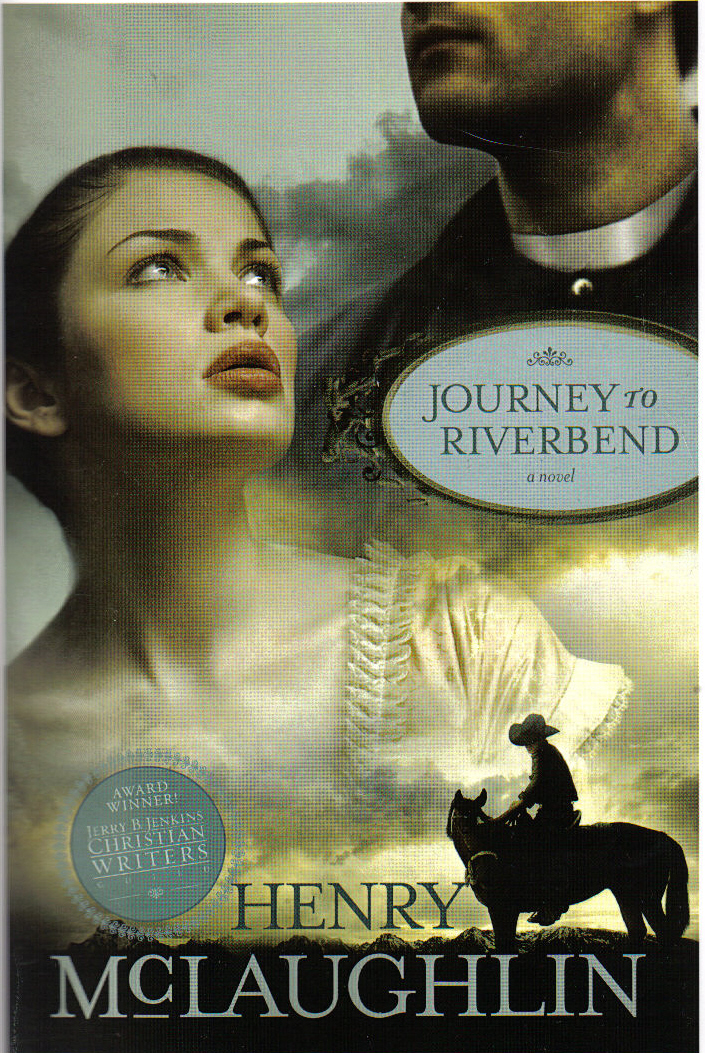
I grew up with the Western…my father an avid reader of Zane Grey. Great television Westerns like Hopalong Cassidy, The Lone Ranger, Roy Rogers and Dale Evans, Bonanza, The Virginian, The Rifleman, just to name a few, a part of my early development: “Happy Trails to You” hummed in my head for more days than I can count. With the success of Lonesome Dove, both the Pulitzer Prize-winning book and the television mini-series, and most recently the remake of True Grit, demonstrates the strong possibility the Western will make a comeback, one of the reasons I why I can recommend Henry McLaughlin’s award-winning book, Journey to Riverbend, due for release February, 2011. http://www.amazon.com/Journey-Riverbend-Henry-McLaughlin/dp/1414339429/ref=sr_1_1?ie=UTF8&s=books&qid=1293586928&sr=1-1 also available on Kindle.

“We’re so proud of Henry and his award-winning first novel. This one grabs you from the first sentence and never lets go.” Said Jerry B. Jenkins, owner of the Christian Writers Guild. And it doesn’t take long before we realize why Henry won Operation First Novel sponsored by Christian Writers Guild.
I echo Jerry’s sentiments because Henry is a former critique partner. Fearless Fiction Writers knew from the first, Henry would do great things with his writing.

Michael Carter makes a journey to Riverbend as a favor to a boy he counseled who dies on the gallows. Ben Cartairs left his home after a falling out with his father and wants more than anything in this world to be reconciled. But, when Ben is hung, unable to prove his innocence, Michael promises to find Ben’s father and tell him he could be proud of the man his son had become, a changed life saved by Grace.  

Soon after his arrival in Riverbend, Michael learns that Ben's father, Sam Carstairs has been kidnapped. Michael joins the search party, determined to fulfill his promise. But the journey to Riverbend isn’t only about Ben and Sam Carstairs. In the tension that follows his journey, Michael recalls his own evil past, his bloody brawl with his father and a journey that had resulted in Michael’s salvation. In Riverbend, Michael meets and falls in love with the beautiful Rachel Stone, a former prostitute who has conquered her past through faith but who is resistant to trust any man.  

And so it is that all the characters McLaughlin introduces are on independent journeys. In this historical western, McLaughlin mirrors the same situations many Christians and non-believers struggle with today. Told with raw reality that was the West of bygone days, McLaughlin takes the reader on parallel journeys. Kudos for a job well done. An entertaining read from start to finish. 

JOURNEY TO RIVERBEND
By Henry McLaughlin
© 2011
Tyndale